From Structure to Speed: What Female Founders Really Need to Scale
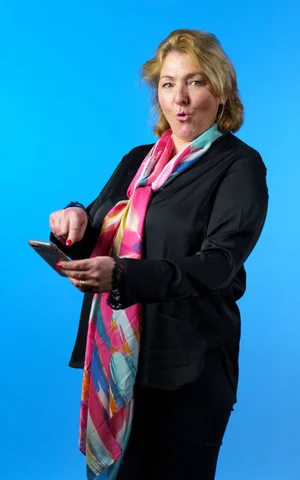
By Polly Barnfield, OBE, CEO of Maybe*
Last week, I found myself having a conversation that felt both long overdue and quietly powerful.
We were filming a panel at the London Stock Exchange, talking about female founders and scaling businesses. And no, not the glossy, overnight-success version that fits neatly into a headline.
The real one. The video will be live in January 2026.
This conversation is the version with messy middles, difficult board conversations, funding trade-offs, capacity crunches and that constant, unspoken pressure many founders carry: am I actually doing this right?
It felt fitting to have that conversation in a place built on capital, governance and long-term growth. Because scaling is not about hustle. It is about structure, leverage and decisions made when things are not comfortable.
“BKL keeps female founders structurally strong. Maybe* makes them operationally fast.”
That sentence pretty much sums up why the partnership between BKL and Maybe* works.
Female founders do not struggle because they lack ideas, ambition or work ethic. They struggle because they are often asked to do too much with too little support, too little capital and far too much noise.
BKL and Maybe* approach that problem from two sides of the same coin.
BKL bring structure.
As a B Corp accountancy and advisory firm, governance, sustainability and long-term thinking are built into how they work. They help founders get real clarity on their numbers, their board, their funding strategy and their risks. Not glamorous work, but absolutely foundational.
Maybe* brings speed.
We build AI colleagues that quietly remove repetitive work from teams. Not shiny tools. Not more dashboards. But AI Agents that live inside the tools your team already uses and take real work off people’s plates, including proposals, reporting, follow-ups, content and internal knowledge.
When structure meets speed, founders stop choosing between control and momentum. They get both.
“BKL turns a good story into investable numbers, which is exactly what female founders need in an unfair system.”
Let’s be honest about the backdrop here.
Female founders are still operating in a system that asks us for proof where others are funded on potential. That means there is very little margin for fuzzy plans or vague forecasts.
This is where BKL are exceptionally strong.
What I see them do best comes down to three things:
Clarity on the numbers
Not just “are we profitable”, but what the unit economics really look like, which products or markets are working, and what the actual cash runway is.
Structuring for growth
They bring advisory, corporate finance and tax expertise together so funding rounds, incentives and ownership structures do not become future problems.
Governance and risk
Because they think long term, not just short-term optimisation. That matters when you are building something designed to last.
For female founders, this level of rigour is not optional. If you are already navigating bias, you cannot afford weak structures. You need a clear growth story, credible governance and complete confidence in your numbers when you sit in front of investors or lenders.
“A balanced board gives you better answers. Tenacity keeps you in the room long enough to use them.”
Boards came up a lot during the conversation. And for good reason.
A balanced board brings perspective, decision quality and credibility. If everyone around the table looks the same and thinks the same way, blind spots are inevitable. Diversity of gender, background, temperament and skill leads to better challenge and better decisions, especially when things get uncomfortable.
But the missing ingredient is tenacity.
There will be meetings where the numbers are not great. Where a deal falls through. Where the plan needs changing. Tenacity is staying in the conversation instead of retreating. Using your board as a resource rather than a judgement panel.
Tenacity is not ignoring reality. It is refusing to let a setback become the whole story.
“Treat AI like a brilliant new colleague, not a mysterious black box.”
AI was, unsurprisingly, a big part of the discussion.
Most founders I speak to feel overwhelmed by AI. Too many tools. Too many promises. Too much noise.
My view is simple.
AI should behave like the colleague you wish you had.
The founders who get this right do three things:
They start with business problems, not tools. Where is time being wasted? Where are balls being dropped? Where is revenue leaking?
They keep humans in the loop. AI drafts. Humans decide. Clear rules about what AI can do alone and where oversight is required.
They protect data and reputation. Knowing where data goes and why outputs look the way they do is not a technical detail. It is a leadership responsibility.
At Maybe*, we are obsessive about this because trust is the real barrier to AI adoption. Most businesses already use AI. Very few actually trust it.
“Female founders do not lack talent. They are usually undercapitalised, overdelivering and carrying too much alone.”
This is the pattern I see most often, and it is rarely acknowledged out loud.
Female founders struggle with access to capital and networks. We overdeliver and undercharge. And we carry an enormous amount emotionally and operationally, often without even realising it.
The fixes are not flashy, but they work:
Get brutally clear on your numbers and your ask.
Price and scope with discipline.
Design systems, not heroics.
Use AI as a lever, not a crutch.
And invest in a network that challenges you to think bigger, not just survive the week.
Scaling is not about working harder. It is about stepping into the role only you can play.
Final word
To all female founders reading this, good luck. Scaling is not easy, but you do not have to do it alone.
If you need trusted accountancy, advisory or board-level support, I am always happy to connect you with the team at BKL. And if you are ready to bring AI Agents into your business in a way that actually saves time and drives growth, you know where to find me.
You have got this. And if you want help building the right structure and the right speed, just ask.
With Maybe*, anything is possible. We are here to help you Get Started.